

The Silk Road
The Silk Road was an important trade route connecting China with Central Asia, West Asia, Europe, and North Africa in ancient times. It mainly includes the overland Silk Road and the maritime Silk Road. The overland Silk Road started from Chang'an (now Xi'an), passed through Gansu and Xinjiang, crossed Central and West Asia, and finally reached Rome and other places in Europe; The Maritime Silk Road starts from the ports along the southeast coast of China, passes through the South China Sea and the Indian Ocean, and extends to coastal areas such as Southeast Asia, South Asia, West Asia, East Africa, and even Europe.
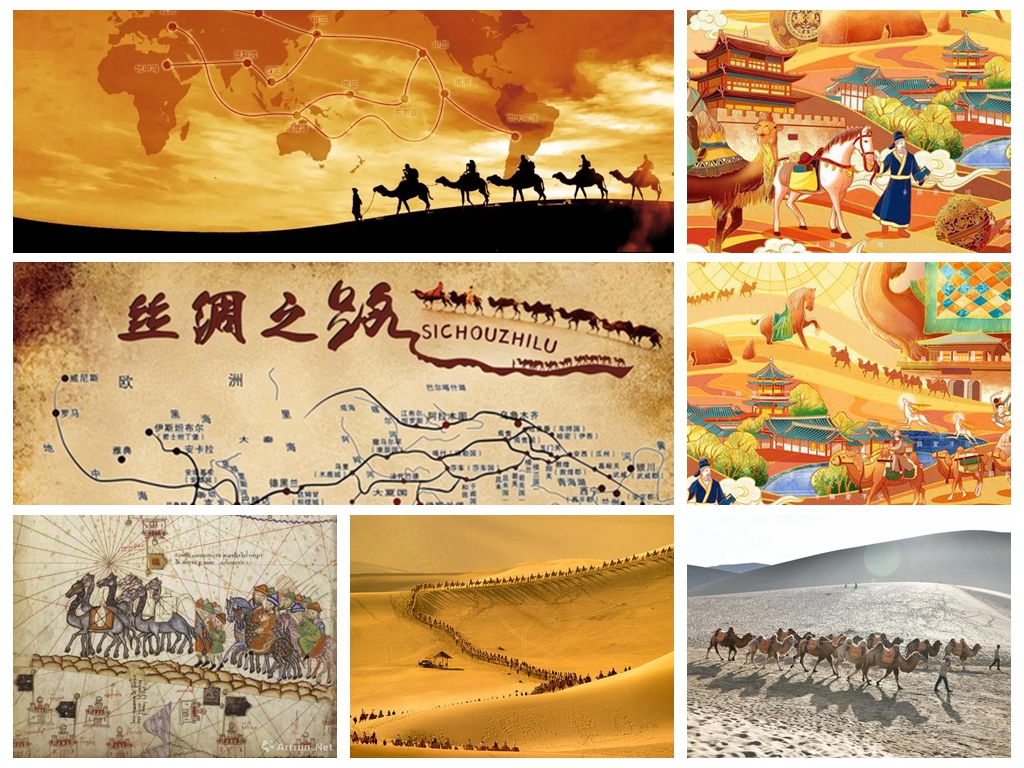
The role played
In terms of economy, it has promoted large-scale commodity exchange between the East and the West, driving the economic development of numerous cities and regions along the route. Chinese specialties are highly popular in the West, bringing abundant trade income to China; Western products have also enriched the Chinese market, meeting the needs of different social classes.
In terms of culture, it has become a bridge for cultural dissemination, where various cultures exchange and integrate with each other on the Silk Road. China's the Four Great Inventions, namely papermaking, printing, gunpowder and compass, spread to the West through the Silk Road, and had a profound impact on the development of science and technology in the West; Western religions (such as Buddhism, which was introduced to China and gradually localized), art, philosophy, etc. have also taken root in China, enriching its cultural connotations.
In terms of transportation, we have opened up transportation routes connecting the east and west, making the flow of people more frequent. Merchants, envoys, missionaries, and travelers from various countries traveled back and forth along the Silk Road, enhancing mutual understanding and communication.
historical significance
Promoting the process of globalization: The Silk Road was an important practice of early globalization, breaking geographical limitations, connecting different civilizations that were far apart, promoting economic and cultural exchanges and integration worldwide, and laying a certain historical foundation for the development of globalization today.
Enriching the treasure trove of human culture: The collision and integration of different cultures on the Silk Road have given rise to many new cultural achievements. Whether in terms of artistic style, architectural form, or ideological concepts, they have become more diverse and rich due to the existence of the Silk Road, greatly enriching the treasure trove of human culture.
Promoting technological development: The dissemination of technological achievements from both the East and the West through the Silk Road has accelerated each other's technological progress. China's the Four Great Inventions have triggered a series of changes in the West. The introduction of some western advanced technologies and knowledge into China has also promoted the development of related fields, which has had an important impact on the history of human science and technology.
Enhancing international understanding and peace: The Silk Road has provided people from different countries and ethnicities with more opportunities for direct contact and communication, helping to eliminate misunderstandings, enhance mutual understanding, and to some extent contribute to regional and global peace and stability.